Helping every child be heard
Key takeaways
Communication goes beyond speech. Gestures, signs, pictures, writing, and communication devices can help children express themselves.
Functional communication supports everyday life. It helps children ask for help, refuse, make choices, share ideas, and connect with others.
Children can use multiple communication methods. Speech and augmentative and alternative communication (AAC) can work together.
Adults help communication succeed by responding. Acknowledge a child’s message, even when a request cannot be met immediately.
Progress includes greater autonomy. Being able to say “no,” request quiet, or invite someone to play matters alongside learning new words.
What are functional communication skills in autism?
Functional communication skills help autistic children express messages that matter in daily life. These include communicating needs, preferences, feelings, questions, and ideas through methods other people can understand.
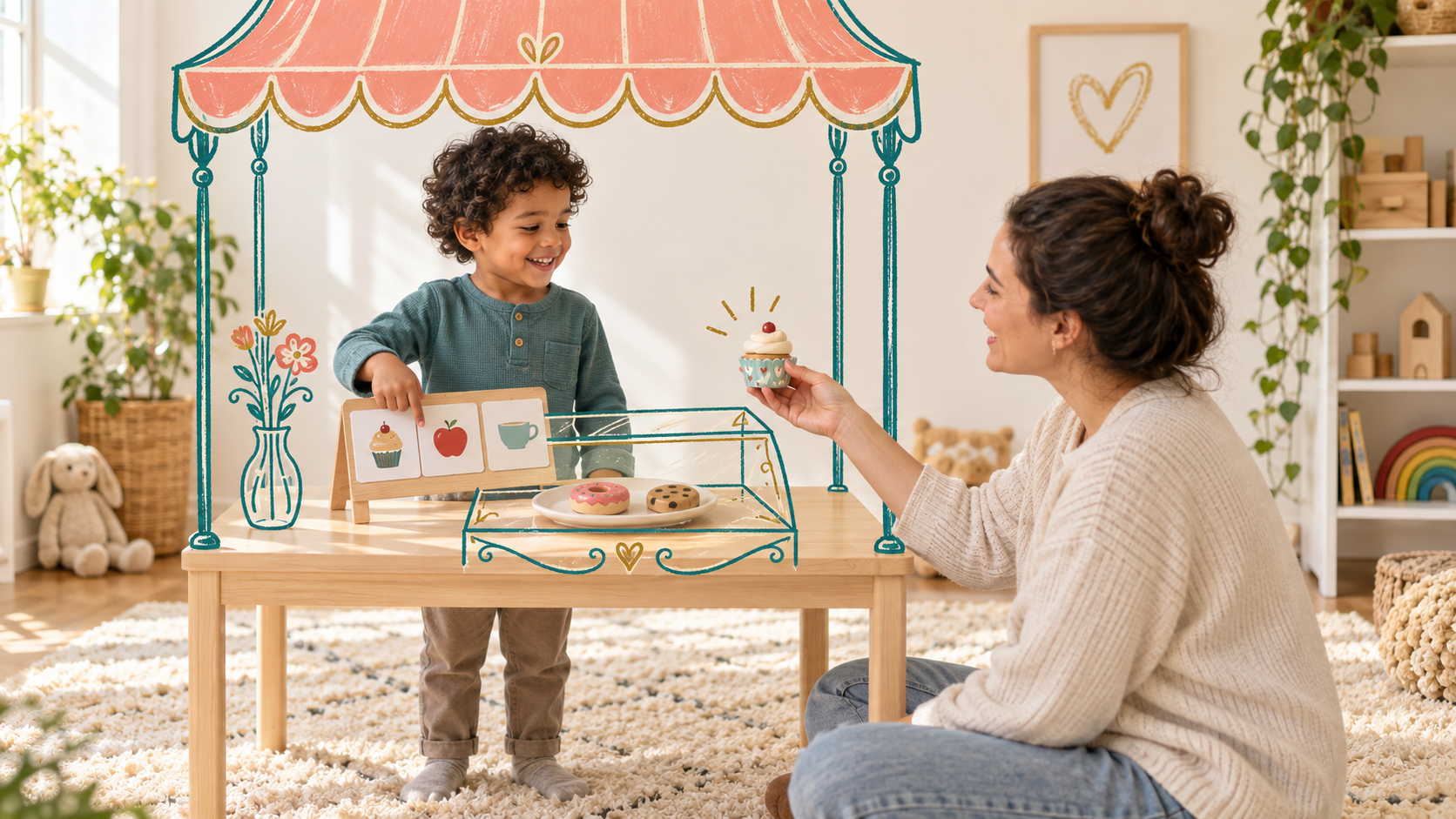
A child might say “help,” point to a picture, sign “more,” or use a communication device to say “I want to play.” Each is a meaningful way to communicate.
The goal is reliable communication that the child can access across people, places, and situations.
How can a child communicate without speaking?
A child can communicate through gestures, facial expressions, signs, pictures, writing, or AAC tools such as a speech-generating device.
Children may use different methods at different times. A child who uses speech in familiar situations may find pictures or a device helpful when speaking is difficult.
AAC can supplement speech or provide another way to communicate. A speech-language pathologist (SLP) can help identify tools that fit a child’s communication and access needs. Learn about AAC
Which communication skills should families prioritize?
Start with messages that are useful and meaningful to the individual child. Priorities should include ways to express needs, set boundaries, and connect with people—not just request objects.
Examples include:
Help and comfort: “Help,” “It hurts,” or “I need quiet.”
Choices and boundaries: “Yes,” “No,” “Stop,” or “Something else.”
Breaks and transitions: “Break,” “More time,” or “All done.”
Connection and enjoyment: “Look,” “Play with me,” or “I like that.”
Choose a communication response the child can use successfully. A gesture or picture may be more accessible than a long spoken phrase.
Does AAC prevent a child from developing speech?
No. AAC does not hinder speech development and may support speech and language learning. Children can use AAC alongside spoken language; introducing AAC does not require giving up speech goals. ASHA guidance on early intervention and AAC
The immediate purpose is to give the child an effective way to communicate. Speech outcomes vary, and access to communication matters regardless of whether spoken language develops.
What might behavior tell us about a child’s needs?
Behavior can provide clues about discomfort, frustration, preferences, or unmet needs, but it does not identify the cause on its own.
For example, crying during a noisy activity could reflect sensory discomfort. Pushing materials away could mean “I’m finished,” “This is confusing,” or something else. Adults need to consider the context rather than assume a single meaning.
Support may include reducing noise, adjusting a task, offering a break, and helping the child communicate what they need. Teaching a new communication response should go together with addressing the underlying difficulty.
How should adults respond when a child communicates?
Acknowledge the message and respond as consistently as possible. Children need to experience that their communication has an effect.
If a child requests a break, recognize the request and provide a break when possible. If a request cannot be met immediately, explain simply and offer a realistic alternative: “The swing is busy. We can wait here or try the slide.”
Respect refusals and signs of distress. Teaching waiting or flexibility should preserve the child’s ability to express discomfort, disagreement, and preferences.
How can parents support functional communication at home?
Build communication opportunities into familiar activities, following the child’s interests and allowing time for a response.
Try these approaches:
Keep communication tools available during meals, play, outings, and transitions.
Offer manageable choices, such as choosing between two activities.
Model a useful word, gesture, or picture without requiring the child to copy it.
Pause briefly to allow a response, while offering help promptly when needed.
Respond to spontaneous communication, including gestures and AAC.
Share the family’s languages, routines, and priorities with the child’s support team.
Everyday routines offer opportunities for connection. Children should not have to perform a particular word or gesture to receive comfort or meet basic needs.
Who can help a child develop communication skills?
An SLP can assess communication needs and guide AAC selection and use. Families, educators, and other involved professionals can collaborate so communication is supported throughout the day. AAC assessment and support
Caregivers bring essential knowledge about the child’s interests, existing communication, languages, and daily experiences. An individualized approach builds on that knowledge.
What does meaningful communication progress look like?
Progress means the child can express more of what matters to them, with greater independence and understanding from others.
It may look like asking for quiet before becoming overwhelmed, telling someone that something hurts, inviting a sibling to play, or refusing an unwanted activity. New words can be meaningful progress, and so can clearer communication through pictures, gestures, or a device.
Communication supports dignity, connection, and a greater say in everyday life.
How can Cherished Stars help our family explore support?
Every child and family brings a different story. Contact Cherished Stars to ask questions about support options and discuss your child’s communication strengths, needs, and goals.